Category: Finance & Rebates | Published: April 13, 2026 | Read time: ~11 minutes
Your morning coffee. That impulse Amazon order at midnight. The “treat yourself” skincare haul. The takeaway you swore would only happen once this week.
These tiny purchases — the ones that barely register when you tap your card — are the reason millions of people arrive at December wondering where the year’s money went. And in 2026, a growing army of people have decided: not this year.
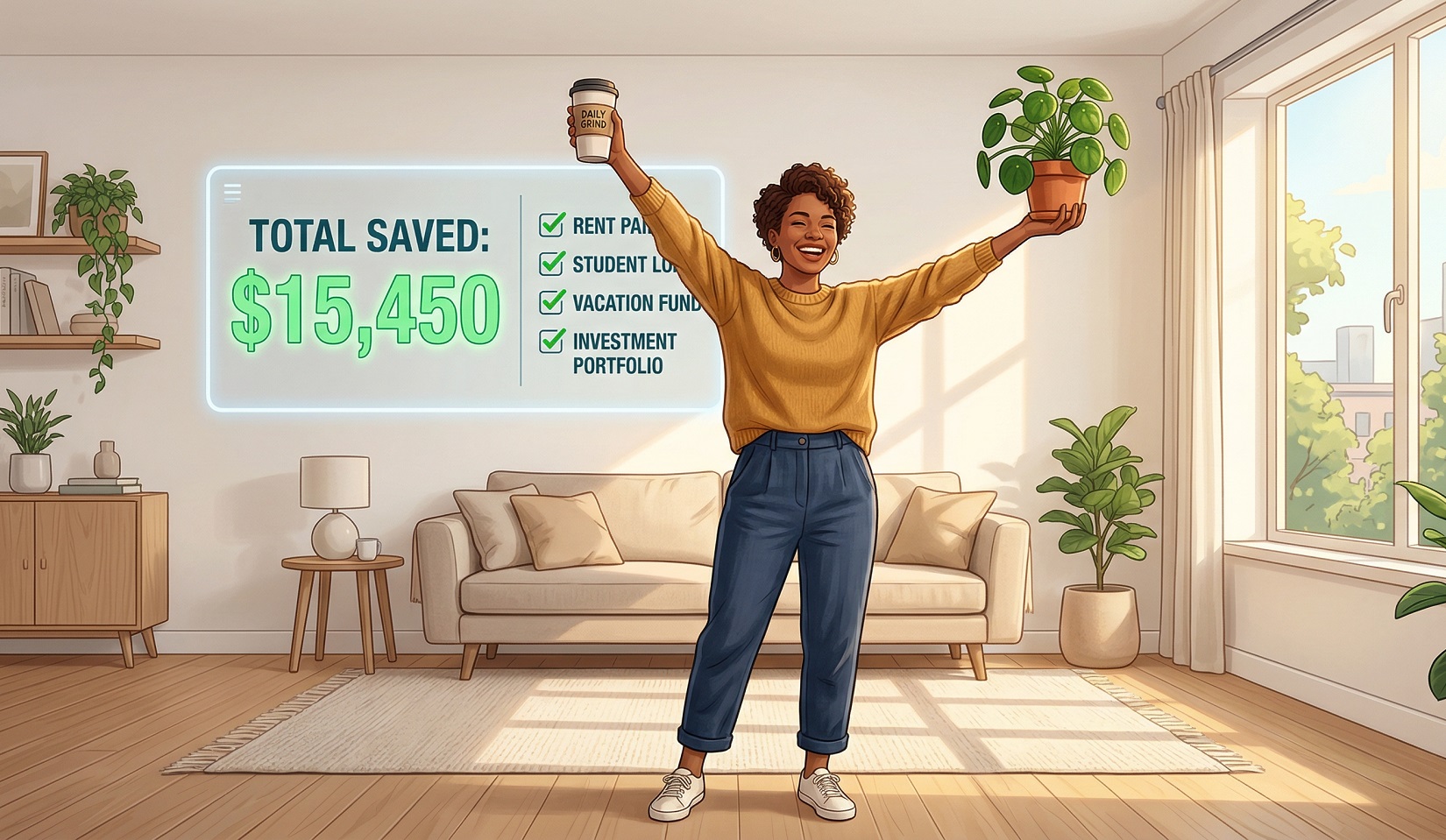
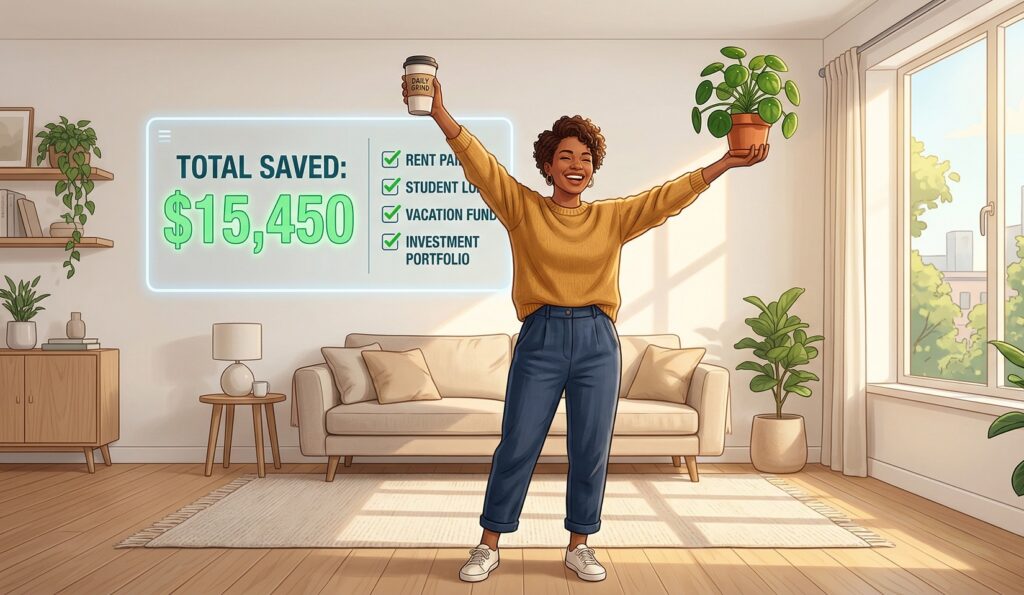
The No Buy 2026 movement has exploded across TikTok, Reddit, Instagram and YouTube, accumulating millions of views, tens of thousands of accountability partners, and — according to participants sharing their results — savings of anywhere from £2,000 to £15,000 in a single year.
But here’s what most viral posts about No Buy don’t tell you: the people who are really winning aren’t just cutting spending. They’re combining mindful consumption with real rebates, government-backed savings opportunities, and — for Americans — a set of new tax deductions most people don’t even know exist yet.
This is the complete guide. Let’s start with the movement itself.
What the No Buy 2026 Movement Actually Is (And Why 2026 Is Different)
The concept is elegantly simple. For a set period — one month, one season, or the full year — you commit to buying nothing beyond genuine necessities. Housing, utilities, groceries, medicine, transport. Everything else goes on the “no” list.
The minimalist personal finance approach, also dubbed “No Spend,” extols radical spending regulation and, in some cases, cutting out all unnecessary purchases to reach goals like paying off debt, buying a home or car — or simply consuming less. The concept is trending with millions of views on TikTok, Instagram, Reddit, and YouTube, where users share their lists online to curb spending.
What makes 2026 uniquely different from previous years isn’t just the viral momentum — it’s the context. Intuit’s Financial Wellness survey, released in January 2026, found 93% of Americans plan money management changes in 2026, with 53% reporting increased financial stress and 54% having regrets from prior spending they aim to address.
In other words: this isn’t a trend born from abundance. People are doing this because they have to — and discovering that it works better than they expected.
The Numbers That Are Making People Stop Scrolling
When TikTok creators started posting their 30-day and 90-day results, the numbers were the real hook. Here’s what participants are actually reporting:
- Cutting dining out alone typically saves £200–£400/month ($250–$500 USD) for a single person
- Removing subscriptions people forgot they had — streaming, gym memberships, apps — often yields £50–£150/month instantly
- Stopping fast fashion shopping for one year saves the average UK woman approximately £1,000+ annually (based on Office for National Statistics average clothing spend data)
- Eliminating “convenience spending” — coffees, impulse food, taxis when public transport exists — adds another £800–£1,500/year
That’s a conservative floor of £2,000 to £3,500 per year for someone fully committed — without any of the rebates, tax breaks, or strategies covered below.
Erica Sandberg, consumer finance expert at BadCredit.org, put it plainly: “It can be very powerful to refine your budget and live modestly for a specific time period. You may set your sights on saving $500 in a month by eliminating going out to dinner and drinks, not buying clothes, and staying off e-commerce platforms that make overspending far too easy.”
The TikTok Money Hacks That Are Actually Working in 2026
The internet has a long history of money “hacks” that don’t survive contact with real life. These are the ones participants are reporting genuine results from.
The 72-Hour Rule. Before buying anything non-essential, you wait 72 hours. If you still want it — genuinely want it, not just impulse-want it — you can consider the purchase. The data from No Buy communities consistently shows that 70–80% of impulse purchases evaporate entirely within 72 hours. The item doesn’t feel important anymore. The urge passes.
The “Cost Per Use” Reframe. Instead of asking “Can I afford this?”, ask “How much will each use of this cost?” A £40 jumper you wear 40 times costs £1 per use. A £15 trendy top you wear twice costs £7.50 per use. This single reframe — popularised by dozens of TikTok finance creators — changes the psychology of shopping faster than any budget spreadsheet.
The “Use What You Have” Month. Before buying anything in a category — skincare, pantry staples, cleaning products — you spend an entire month using up what you already own. Most households discover they have 3–6 months of product sitting in cabinets they’d completely forgotten about.
The “Scroll and Don’t Buy” Detox. Financial content creators recommend unsubscribing from every single online retailer you’ve ever shopped with. The sales are never as good as they claim. But the bigger psychological trick is this: uninstall shopping apps entirely. Not from your phone — from your home screen. The friction of finding and reinstalling an app breaks enough impulse purchases to matter.
The “Loud Budgeting” Principle. Personal finance is no longer a taboo topic in everyday conversations. In 2026, consumers are embracing “loud budgeting” — openly sharing their financial wins, challenges and resources within their social circles. This shift, breaking down the stigma around discussing personal finances, makes it easier for consumers to seek advice and meet their goals. Telling your friends you’re doing No Buy 2026 out loud is itself a powerful accountability mechanism. Most participants say social pressure works in their favour.
The Digital Envelope System. Rather than physical cash envelopes (which go stale in a cashless economy), high-yield savings accounts now offer multiple “buckets” — separate virtual envelopes within one account for different savings goals. You name each bucket (Holiday Fund, Emergency Fund, New Car), automate transfers in, and psychologically the money is already spent on its goal before you can impulse-buy with it.
The Real Savings Strategy: Where the Big Numbers Come From
Going viral on TikTok and cancelling Netflix is cute. Here’s how participants are stacking actual thousands.
Step 1: The Subscription Audit. Spend 20 minutes going through every bank statement from the past three months and highlight recurring charges. Most people find 5–8 subscriptions they either forgot about or thought they’d cancelled. These typically include streaming services, cloud storage tiers, old gym memberships, apps that auto-renewed, premium versions of free tools, and delivery service memberships. At an average of £8–£15 each, cancelling six of them is worth £600–£1,080 per year with zero lifestyle change.
Step 2: The Grocery Game. Take inventory of things you have in your home before you go shopping to make sure you are not buying duplicate items. Also, ask yourself what you will use the item for and how often you will use it before committing. Additionally, UK shoppers have a structural advantage right now: budget supermarkets Aldi and Lidl continue to undercut major chains on essentials by 20–35%. Simply switching supermarkets for a 3-person household in the UK saves an average of £1,200–£2,000/year according to consumer research.
Step 3: The Energy Automatic Win (UK). This one requires zero effort. From 1 April 2026, households in England, Scotland and Wales have seen their energy bills cut by £150 a year on average, confirmed in the Autumn Budget. The reduction takes place due to various green levies paid by consumers being removed from bills. You don’t need to do anything. The savings applied automatically on 1 April 2026 across all major energy suppliers. From 1 April 2026, the price cap is £1,641 a year for a typical household paying by Direct Debit. If you’re still on a high variable tariff and haven’t checked since last year, right now is the moment to use a comparison tool and potentially save an additional £200–£400 on top of the automatic reduction.
Step 4: The High-Yield Account Switch (US + UK). This is the single most underused action on any No Buy list. If your savings are sitting in a standard bank account earning 0.2–0.5% interest, you are actively losing money to inflation every single day. High-yield savings accounts are delivering up to 5.00% APY as of April 2026 — that’s significantly higher than the FDIC’s national average of 0.39%. On £10,000 saved, the difference between 0.4% and 5.0% is £460 per year, for doing nothing differently except opening a different account. UK savers have equivalent options through easy-access cash ISAs and premium savings accounts — some offering 4.5–5% at time of writing.
Step 5: The Secondhand Switch. No Buy doesn’t mean never replacing things that break or wear out. It means buying secondhand first. With 11% of British shoppers now starting their journey on secondhand platforms, apps like Vinted are dominating UK retail in 2026. For Americans, Poshmark, ThredUp and Facebook Marketplace fill the same role. Replacing a £60 new item with a £12 secondhand equivalent, done six times across the year on things you genuinely needed anyway, saves over £280 while buying better-quality pieces than fast fashion would provide.
The UK Rebate Playbook: Free Money You Might Be Leaving Behind
This section is specifically for UK readers. These aren’t hacks — they’re government-backed schemes that exist specifically to put money back in your pocket.
The Warm Home Discount (£150 off electricity). If you receive certain means-tested benefits and your name is on the electricity bill, you may be entitled to £150 taken directly off your electricity bill. If you get benefits, you might be able to get £150 off your electricity bill or £150 added to your prepayment meter. You don’t need to apply for the scheme — payments are automatic. Check Citizens Advice or gov.uk to confirm eligibility.
The Boiler Upgrade Scheme. The UK Government’s Boiler Upgrade Scheme provides grants to replace old fossil fuel boilers with heat pumps. Grants are currently worth up to £7,500 for an air source heat pump. This is not a rebate in the traditional sense — but for homeowners facing boiler replacement in the next 1–3 years, it is effectively a £7,500 cheque from the government to make the upgrade cheaper.
Free Insulation Through ECO4. Until its recent transition, the Energy Company Obligation (ECO) scheme provided free or heavily subsidised loft insulation, cavity wall insulation, and other energy efficiency improvements to qualifying households. The scheme has now transitioned, but eligible households — particularly those on lower incomes or receiving benefits — may still access insulation grants. Properly insulated homes save an average of £280–£580/year on heating.
Council Tax Reduction. Millions of UK households are eligible for Council Tax Support but never apply. If you’re on a low income, receiving Universal Credit, or are a student, single occupant, or carer, you may qualify for a significant reduction or exemption. A single person’s council tax discount alone is 25%. On a Band D bill of £1,800, that’s £450 back without doing anything beyond notifying your local council.
Cashback Sites and Apps. UK-based cashback platforms like TopCashback and Quidco offer genuine cashback on everything from grocery deliveries to insurance renewals to hotel bookings. Users who route all online purchases through these platforms report £200–£500/year in cashback — on purchases they were making anyway.
The American Rebate Playbook: The OBBBA Tax Breaks Nobody’s Talking About
For US readers, 2026 brings one of the most significant shifts in tax law in years — and most people are only dimly aware it applies to them.
The One Big Beautiful Bill Act (OBBBA), signed on July 4, 2025, contains several new deductions that could put thousands of dollars directly back into your pocket when you file taxes. Here’s what the No Buy 2026 crowd needs to know.
No Tax on Tips (up to $25,000). Employees and self-employed individuals may deduct qualified tips received in certain qualified occupations, such as wait staff, bartenders, salon workers, personal trainers, gig economy workers, and many more who customarily and regularly receive tips. The deduction is available for up to $25,000 per taxpayer, with a phaseout beginning for modified adjusted gross income over $150,000 (over $300,000 for Married Filing Jointly filers). If you work in any tipped occupation and you didn’t update your W-4 to account for this, you likely overpaid income taxes throughout 2025 — and you’re owed a refund.
No Tax on Overtime (up to $12,500). Individuals who receive qualified overtime compensation may deduct the pay that exceeds their regular rate of pay — generally the “half” portion of “time-and-a-half” compensation — up to a maximum annual deduction of $12,500 ($25,000 for joint filers). The deduction is available to itemizers and non-itemizers alike. If you worked overtime in 2025, check whether your employer properly documented this on your W-2 before you file.
The $6,000 Senior Deduction. In addition to the standard deduction or itemized deduction, taxpayers 65 and older will be able to take an additional $6,000 off of their taxable income — starting to decrease for taxpayers with a MAGI over $75,000 (single) / $150,000 (joint). This is not widely publicised. If you’re over 65 and nobody has told you about this yet, speak to a tax professional before filing.
Expanded SALT Deduction (up to $40,000). The OBBBA increases the SALT deduction cap to $40,000 and makes it effective for tax years 2025 through 2029, with income limits gradually reducing the benefit beginning at $500,000 of annual income. If you live in a high-tax state like California, New York, New Jersey or Illinois and previously hit the old $10,000 cap, this change could be worth thousands to you.
Bigger Tax Refunds — Overall. When taxpayers file their 2025 tax returns in 2026, many will see larger refunds than in recent years. The OBBBA reduced individual income taxes for 2025 by an estimated $129 billion. Private-sector economic analysis suggests the OBBBA will result in up to $100 billion in higher refunds in 2026 overall, with average refunds up between $300 to $1,000 compared to a typical year.
The No Buy 2026 strategy for Americans is clear: do not spend your tax refund. Funnel it directly into a high-yield savings account the same day it arrives. Even a $1,000 refund earning 5% APY is $50 of interest over a year — and that’s before the behavioural benefit of not touching it.
Your No Buy 2026 Rule Framework: The 5-Level System
The beauty of No Buy is that it’s customisable. Most participants fail when they try to go cold turkey. The “5-Level System” used by experienced practitioners builds in sustainability from the start.
Level 1 — Cancel & Audit (Week 1). Cancel all subscriptions you haven’t used in 30 days. Audit three months of bank statements. Move savings to a high-yield account. This alone is worth £500–£1,000/year. Do nothing else.
Level 2 — The 72-Hour Rule (Month 1). Nothing non-essential gets bought without a 72-hour waiting period. No exceptions. Track what you wanted to buy and didn’t in a notebook or notes app — the running total becomes its own motivation.
Level 3 — Category Freezes (Months 2–3). Freeze one spending category completely for 30 days. Clothing is the most popular. Then cosmetics. Then takeaways. Then home goods. One at a time. Replace the spending with the “use what you have” ritual.
Level 4 — Secondhand First (Month 4 onward). Every genuine replacement purchase — something broken, something worn out, something legitimately needed — gets sourced secondhand first. Only buy new if secondhand isn’t available or practical.
Level 5 — The Full No Buy. By month 5 or 6, many participants naturally arrive here: genuinely preferring not to buy things that don’t add lasting value. Melanie Musson, an insurance and finance expert at Clearsurance.com, noted: “Following no-buy principles helps people appreciate what they already have and learn to be content without a new dopamine hit every time they make a purchase.”
What to Do With the Money You’re Saving
Saving £2,000–£5,000 by not spending it is only half the equation. The second half — arguably more important — is where you park it.
Emergency Fund First. The standard guidance remains three to six months of essential expenses. If you don’t have this yet, it’s the first destination for every pound or dollar you save through No Buy. High-yield savings account. No exceptions.
Debt Elimination Next. Experts emphasise setting clear goals to motivate the challenge, such as saving for a house, making IRA contributions, or paying off debt. If you’re carrying high-interest debt — credit card balances at 20%+ APR — every pound you pay toward that debt earns you a guaranteed 20% return. Nothing else in this article comes close.
401(k) to the Match (US Readers). For 2026, you can contribute up to $7,500 to an IRA, which helps you reach your retirement goals and is a tax-smart planning strategy. If your employer offers a contribution match on a 401(k), contribute at minimum enough to capture the full match. An employer matching 50% of contributions up to 6% of salary is a guaranteed 50% return on that money. It is the single best financial return available to most employed people.
Invest the Surplus. Once your emergency fund is full and your debts are addressed, savings sitting in a high-yield account are doing the right thing in the short term. For money you won’t need for five years or more, low-cost index funds consistently outperform savings accounts over time. This is the step most No Buy participants discover when they’ve cleared space to think about it.
The Honest Truth About Why No Buy Works When Budgets Don’t
Budgets fail because they require ongoing willpower. You have to make the right decision every single time — and willpower is a finite resource.
No Buy works because it eliminates the decision entirely. You’ve already decided. The answer is no. There is no ongoing negotiation with yourself in the checkout line, no “just this once” spiral, no mental energy spent calculating whether you can afford something. You already know the answer.
As Erica Sandberg explained: “Joining other people who are doing the same thing can offer valuable support. Spending on things that you don’t really need is a waste and hurts other goals you may have, such as saving for a car or home. But joining other people who are doing the same thing can offer valuable support.”
That’s why the online community element is so central to the movement’s success. Search #NoBuy2026 on TikTok and you’ll find thousands of people sharing their lists, their wins, their slip-ups, and their end-of-month totals. Accountability costs nothing. And in 2026, it’s worth a lot more than zero.
Your Action Checklist: Start Today
Use this to get moving in the next 30 minutes.
For everyone: Cancel every unused subscription right now. Switch savings to a high-yield account. Write down your No Buy categories and your “why.” Tell one other person you’re doing this.
For UK readers: Check if you’re eligible for the Warm Home Discount at gov.uk. Use MoneySavingExpert’s free Cheap Energy Club to check if you’re on the best energy tariff. Look up your Council Tax band and confirm you’re receiving any discounts you qualify for.
For US readers: Update your W-4 at work to account for the OBBBA tip and overtime deductions if applicable. Check whether you qualify for the senior deduction. When your tax refund arrives, transfer it to a high-yield savings account the same day. Confirm you’re earning at least 4% APY on existing savings — many banks are still offering this as of April 2026.
Disclaimer: This article is for informational purposes only and does not constitute financial or tax advice. For personal tax advice, consult a qualified professional. Tax rules can change; always verify current rates at irs.gov (US) or gov.uk/hmrc (UK).
ViralZip.blog is powered by a dedicated team of digital analysts and tech journalists committed to “zipping” through the noise of the information age. With a combined background in investigative research and financial data analysis, our contributors focus on the intersection of emerging AI technology, local economic shifts, and global news trends. We take pride in translating complex data into actionable insights for modern residents across the US and UK. Our mission is to provide high-velocity, reliable information that empowers our readers to navigate the rapidly evolving landscape of 2026.
Disclaimer: The content provided on ViralZip.blog is for informational and educational purposes only. While we strive for accuracy, the fields of artificial intelligence, financial rebates, and medical technology are subject to rapid changes; therefore, we do not guarantee the completeness or absolute reliability of the information provided. This content does not constitute professional financial, medical, or legal advice. Always consult with a licensed professional—such as a financial advisor, doctor, or attorney—before making significant decisions based on trending data. ViralZip.blog is not responsible for any actions taken or outcomes achieved based on the suggestions provided in our articles.
Sources: Yahoo Finance — No Buy 2026 Trending Money Move; The Independent / Inkl — No Buy 2026 Explainer; IRS.gov — OBBBA Tips and Overtime Guidance; TurboTax — OBBBA Tax Changes; H&R Block — OBBBA Overview; RBC Economics — OBBBA 2026; Tax Foundation — OBBBA Refunds; MoneySavingExpert — April 2026 Energy Bills; Citizens Advice — Energy Grants and Benefits; Rest Less — £150 Energy Saving; Fortune — Best High-Yield Savings Accounts April 2026; Bankrate — HYSA April 2026; Yahoo Finance — Best and Worst Viral Savings Trends; Capital One / Axios — 5 Financial Trends 2026