Google Owes You Money: Is Your Android Phone One of the 100 Million Eligible for the $135M Payout?
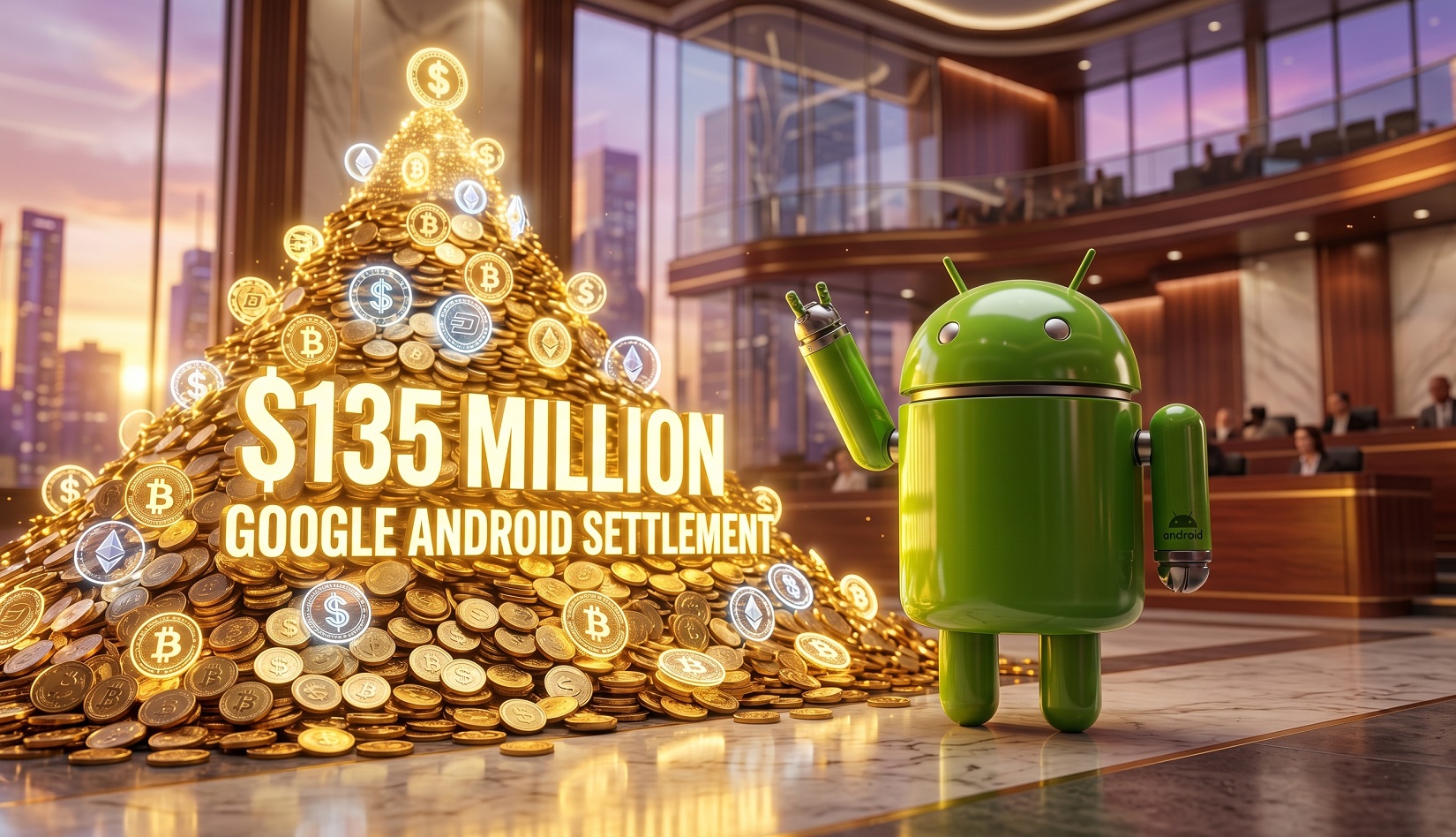
What is the $135M Google Android Settlement? The Taylor v. Google LLC settlement is a $135 million fund established to compensate U.S. Android users for unauthorized background cellular data usage. If you used an Android device on a cellular network between November 12, 2017, and April 2026, you may qualify for a cash payment of up to $100. The deadline to object or opt-out is May 29, 2026.
For years, a “dirty little secret” has been humming away inside your pocket. While you slept, while your phone was locked, and even when your apps were supposedly closed, your Android device was busy. It wasn’t just checking for emails; it was transmitting vast amounts of data back to Google’s servers—using the cellular data you paid for.
We find this particularly egregious because this wasn’t just a minor technical glitch. According to the class-action lawsuit Taylor v. Google LLC, this was a systemic “conversion”—a legal term for the unauthorized use of someone else’s property. In this case, the property was your monthly data allowance.
The agitation here is real: you paid your carrier for a set amount of gigabytes, and Google effectively “free-rode” on your bill to power its own advertising and tracking engines. But there is a solution. Following a preliminary approval in March 2026, a $135 million settlement fund is now open for claims. As a specialized team of researchers and strategists, we’ve dissected the court filings to help you secure your share.
The “Data Theft” Angle: Why This Isn’t Just a Privacy Case
Most tech settlements revolve around “privacy leaks” or “hacks.” This is different. Our team views this as the Android Data Tax.
The lawsuit alleged that Android devices were designed to prioritize Google’s data needs over the user’s wallet. Even when users explicitly turned off “Location History” or closed out of Chrome, the “Background Data” kept flowing.
The Industry Standard Myth
Google’s defense team argued that these background transfers are “standard industry practices” necessary to keep the Android ecosystem safe and updated. We disagree. The court filings suggest that much of this data was leveraged for Google’s $200+ billion advertising machine. By using consumer-paid cellular data instead of waiting for a Wi-Fi connection, Google ensured its data stream was never interrupted—effectively making you a silent financier of their infrastructure.
Am I Eligible? Deciphering the “Class Member” Requirements
Not every Android user will get a check. Our subject matter experts have narrowed down the three strict criteria you must meet to be considered a “Class Member” in the Taylor settlement:
- Geography: You must be a “natural person” residing in the United States.
- The “Class Period”: You must have used an Android device to access the internet via a cellular data network at any point between November 12, 2017, and the date of final approval (expected June 2026).
- The California Exclusion: This is the most important “fine print” we found. If you were part of the Csupo v. Google LLC case—a separate California-specific lawsuit that recently reached a $350 million verdict—you are likely excluded from this $135 million nationwide pool. You cannot “double-dip” on both settlements.
How Much Cash Will You Actually Get?
We’ve seen headlines promising “thousands,” but let’s be realistic. The settlement fund is $135 million, and there are an estimated 100 million eligible users.
While the court has placed a $100 cap on individual payouts, the final amount depends entirely on participation rates. Class actions typically see a 3% to 8% claim rate. If only 5 million people “elect” their payment method, your check could be a meaningful $20–$30. If participation is higher, expect a “pro-rata” distribution closer to $5–$10.
Regardless of the final amount, this is about more than just the cash; it’s about the injunctive relief. As part of the settlement, Google is being forced to update its disclosures and terms of service, finally admitting to the “how and why” of background data transfers.
Step-by-Step: How to Secure Your Payout at FederalCellularClassAction.com
Unlike many settlements that require a mountain of paperwork, the Taylor case is remarkably streamlined because Google already knows who you are. However, to ensure your money lands in the right account, we recommend taking active steps before the May 29, 2026 deadline.
1. Locate Your Notice ID and Confirmation Code
By now, an email or postcard should have arrived from the settlement administrator (Angeion Group). It contains a unique Notice ID and Confirmation Code.
- Pro Tip: Check your “Promotions” or “Spam” folders for an email from
info@federalcellularclassaction.com. If you can’t find it, you can contact the administrator at 1-844-655-4255 to request your credentials.
2. Submit the Payment Election Form
Once you have your codes, log in at the official portal: FederalCellularClassAction.com. Here, you can choose how you want to be paid.
- Digital Options: Zelle, Venmo, PayPal, or a Virtual Mastercard.
- Traditional Options: ACH Direct Deposit or a physical check (though digital is faster).
- Note: If you do nothing, a payment may still be sent to the email associated with your Google account, but selecting a specific method ensures it doesn’t get lost in an old, unused PayPal account.
3. Review the “Exclusion” and “Objection” Options
If you believe $100 (the maximum cap) is insufficient and you intend to sue Google individually for these data practices, you must opt-out by May 29. If you remain in the class, you waive your right to any future individual litigation regarding this specific cellular data issue.
Beyond the Cash: How This Changes Android Privacy Forever
While the $135 million fund gets the headlines, the Injunctive Relief—the legally mandated changes to Google’s behavior—is arguably more important for the future of mobile privacy.
As a direct result of this settlement, Google has agreed to:
- Stop “Silent” Harvesting: Google must fully stop collecting data for certain background processes when the “allow background data usage” option is toggled off in Android settings.
- Update Terms of Service: The Google Play ToS will now explicitly state that data transfers will occur passively when not on Wi-Fi and that users are effectively paying for this with their cellular plans.
- Transparent Setup: New Android devices will now include a clear “consent” screen during the initial setup process that specifically mentions cellular data reliance for background services.
Frequently Asked Questions (FAQs)
Who is eligible for the Google Android settlement?
Any U.S. resident who used an Android device on a cellular network between Nov 12, 2017, and mid-2026. California residents are generally excluded as they were covered by a separate state-level case (Csupo v. Google).
When is the payout date?
The Final Approval Hearing is set for June 23, 2026. If the judge approves the settlement and there are no appeals, payments typically begin within 60 to 90 days—likely by late August or September 2026.
Is this a scam?
No. The settlement is court-authorized and managed by a legitimate third-party administrator. However, never provide your Google password or bank login details to anyone claiming to “help” with the settlement. Use only the official federalcellularclassaction.com website.
How much will I actually get?
The individual payout is capped at $100. However, with 100 million potential claimants, the actual amount will likely be a “pro-rata” share based on how many people file. Realistic estimates suggest $5 to $20 per user.
The Verdict: Should You File?
In short: Yes. While the payout might not buy you a new flagship phone, it is a symbolic victory for consumer data rights. By participating, you are joining 100 million other voices in telling Big Tech that our paid resources—be it our time, our privacy, or our cellular data—are not free for the taking.
ViralZip.blog is powered by a dedicated team of digital analysts and tech journalists committed to “zipping” through the noise of the information age. With a combined background in investigative research and financial data analysis, our contributors focus on the intersection of emerging AI technology, local economic shifts, and global news trends. We take pride in translating complex data into actionable insights for modern residents across the US and UK. Our mission is to provide high-velocity, reliable information that empowers our readers to navigate the rapidly evolving landscape of 2026.
Disclaimer: The content provided on ViralZip.blog is for informational and educational purposes only. While we strive for accuracy, the fields of artificial intelligence, financial rebates, and medical technology are subject to rapid changes; therefore, we do not guarantee the completeness or absolute reliability of the information provided. This content does not constitute professional financial, medical, or legal advice. Always consult with a licensed professional—such as a financial advisor, doctor, or attorney—before making significant decisions based on trending data. ViralZip.blog is not responsible for any actions taken or outcomes achieved based on the suggestions provided in our articles.