
On the night of February 27, 2026, Oman’s Foreign Minister stood before the world and announced that peace was “within reach.” Iran had agreed to stop enriching uranium. Negotiations were on track. A new round of talks was scheduled for that Monday in Vienna.
Less than 12 hours later, the bombs were already falling.
What happened in between? That’s the question that nobody in Washington, Tel Aviv, or Tehran seems eager to answer — and the silence itself is deafening.
The Ceasefire That Wasn’t: The Night Before Everything Changed
On the evening of February 27, 2026, Badr Al-Busaidi — Oman’s Foreign Minister and the trusted back-channel broker between Washington and Tehran — made a stunning announcement. Iran had agreed, he said, to never stockpile enriched uranium and to allow full IAEA verification. He called it a breakthrough that had “never been achieved” in decades of negotiations.
Talks were set to resume on Monday, March 2. Technical teams from Iran and the IAEA were expected in Vienna that same week. Iranian Foreign Minister Abbas Araghchi went on state television and confirmed the talks were moving forward.
The world exhaled.
Then, sometime before dawn on February 28, a very different chain of events was already in motion — one that had been set in place long before Oman’s foreign minister made his hopeful announcement.
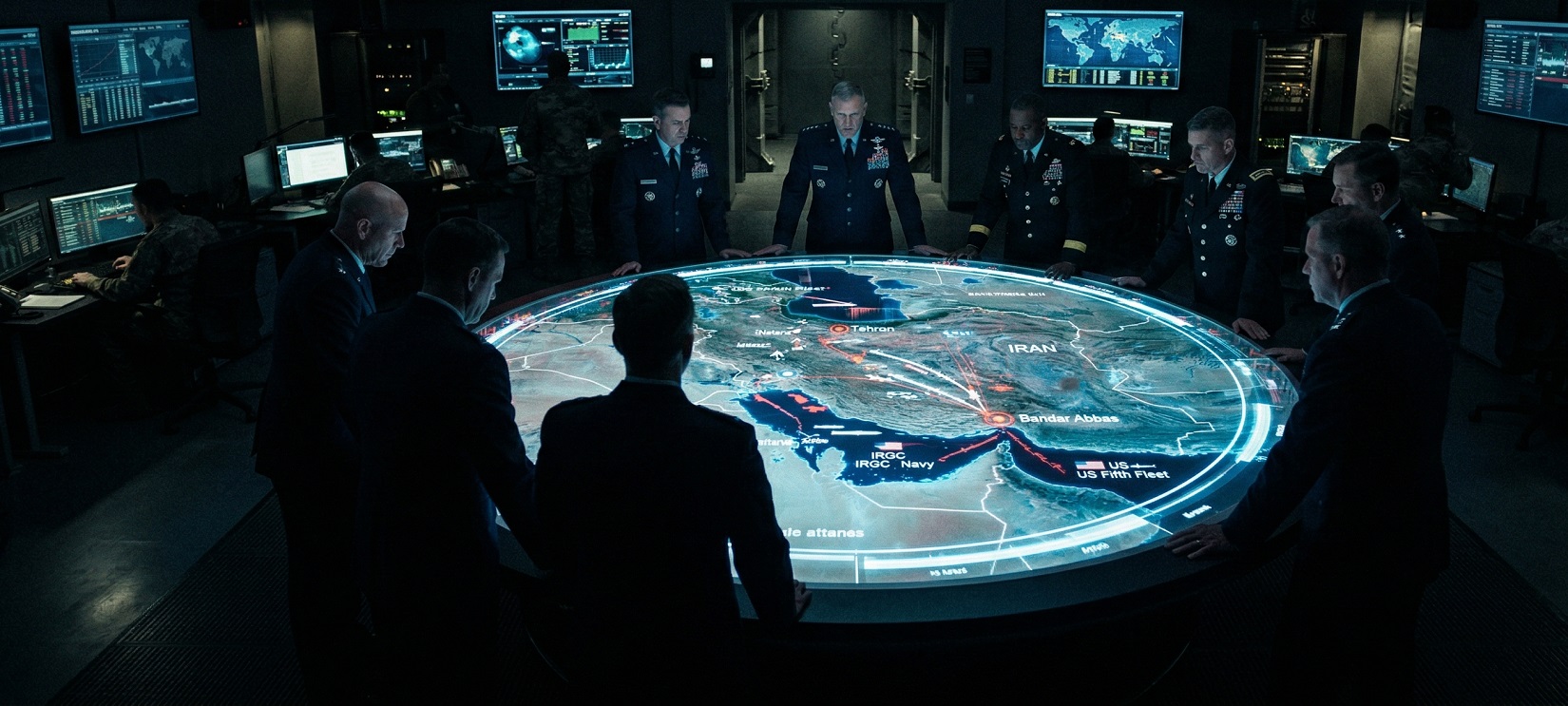
At 20:38 UTC on February 27 — while diplomatic statements were still echoing across the world’s news feeds — U.S. President Donald Trump gave the final go-order to CENTCOM.
Operation Epic Fury was a go.
Fake Satellites, Ghost Planes, and Months of Military Theater
Here’s what makes the timeline truly strange: the deception wasn’t improvised. It was planned for months.
In the days after the strikes began, IDF Spokesperson Brigadier General Effie Defrin revealed in a Fox News interview that the U.S. and Israel had engaged in months of coordinated “strategic and operational deception” — specifically designed to manipulate what satellite imagery would show in the hours leading up to February 28.
IDF Chief of Staff Lieutenant General Eyal Zamir had gone home from headquarters the night of the strike — without his official car — precisely so that enemy satellites would read the base as quiet, understaffed, and unprepared. Fighter jets were positioned to appear unarmed. Runways were kept clear.
The world’s eyes — commercial satellites, Iranian intelligence, anyone watching from above — would have seen nothing unusual. No unusual aircraft movement. No telltale signs of imminent large-scale attack.
Meanwhile, on the ground and in the air, one of the most complex military operations in modern history was already entering its final countdown.
“The Armada” and the 10-Day Deadline Nobody Noticed
Go back a few weeks. On January 23, 2026, Trump posted on Truth Social: “A massive Armada is heading to Iran.”
Most people read it as bluster. It wasn’t.
By February 13, the USS Gerald R. Ford — a second carrier strike group — had already set sail for the Middle East, creating an extraordinarily rare dual-carrier deployment. On February 24, twelve F-22 fighter jets, the U.S. military’s premier offensive stealth aircraft, were quietly moved to Ovda Airbase in southern Israel. It was the first-ever U.S. deployment of offensive weaponry on Israeli soil.
And on February 26 — two days before the strikes — Fox News reported that the U.S. Fifth Fleet headquarters in Bahrain had been quietly reduced to fewer than 100 “mission critical” personnel. Satellite photographs confirmed all U.S. ships based in Bahrain had already left port.
This wasn’t preparation for negotiation.
Trump had, according to reporting, issued Iran a roughly 10-day deadline to reach a deal. When that deadline expired without a comprehensive agreement, the order went out. The bombs followed.
The Diplomatic Double-Cross: Who Knew What, and When?
This is where the mystery deepens into something genuinely unsettling.
On February 27 — the same day Trump secretly issued the final go-order — Vice President JD Vance had met with Oman’s Foreign Minister Al-Busaidi. The Omani diplomat walked away from that meeting believing a breakthrough had occurred. He told the world peace was at hand.
Was he deceived? Or was he being used as cover?
After the strikes began, Al-Busaidi said publicly that he was “dismayed” — that “active and serious negotiations” had been directly undermined. Iran’s key negotiator Ali Larijani, Secretary of the Supreme National Security Council, was killed in the opening strikes — eliminating one of Tehran’s primary diplomatic voices.
On March 1, Trump claimed that “Iranian leaders wanted to resume negotiations” and that he had agreed. Six days later, he wrote: “There will be no deal with Iran except UNCONDITIONAL SURRENDER!”
The negotiations had been real. The diplomacy had been real. And yet, the strikes had been authorized while those negotiations were still actively underway.
The question that nobody in the mainstream media is asking plainly: Was the negotiating table set up as a trap?
Senior Iranian officials, including Supreme Leader Ali Khamenei himself, had been lured into gathering at compound meetings by the belief that diplomacy was progressing. The opening Israeli decapitation strikes on February 28 targeted exactly those gatherings — killing Khamenei, dozens of senior officials, and members of his family.
CSIS analysts noted that Iran’s “nuclear concessions were almost certainly different things to each party.” Iran believed it had given ground. The U.S. had already decided the ground wasn’t enough — and may have decided so weeks before the Oman talks even concluded.
What the Pentagon Still Won’t Tell You
Weeks into the conflict, a remarkable pattern has emerged in the official Pentagon account of events: the stated reasons for the war keep shifting.
The Trump administration has offered the following justifications at various times:
- To forestall Iranian retaliation after an expected Israeli attack
- To stop an “imminent Iranian threat”
- To destroy Iran’s missile capabilities
- To prevent Iran from building a nuclear weapon
- To seize Iran’s oil resources
- To achieve regime change from within
Each of these is a different war. And only one can be true at a time.
Meanwhile, critical questions remain conspicuously unanswered:
Why were the strikes launched during active negotiations? By multiple accounts — Omani, Iranian, and European — talks were progressing. The third round of nuclear talks had just concluded in Muscat. A fourth round was scheduled for Vienna the following week.
What happened to the Vienna talks? Technical teams from the IAEA had been expected in Vienna on Monday, March 2. No U.S. official has explained why the decision was made to strike on Saturday, February 28, when negotiations were scheduled to continue 48 hours later.
What changed on February 27 between Vance’s meeting with Al-Busaidi and Trump’s go-order? The timeline — public diplomatic breakthrough in the afternoon, secret military order in the evening — has never been coherently explained.
Why were embassies evacuated before the official public justification was given? On February 27, multiple Western embassies in Tehran were quietly evacuated. The U.S. State Department declared Iran a “state sponsor of wrongful detention” that same day — a diplomatic designation that typically requires weeks of internal review.
Iran’s Accelerated Oil Exports: Did Someone Know in Advance?
Between February 15 and 20, Iran made a curious move. The country tripled its oil exports — loading approximately 20 million barrels onto tankers in just six days — and simultaneously reduced its domestic oil storage to bare minimum levels.
In hindsight, this looks less like coincidence and more like preparation. If Iran expected a military strike that would cut off its oil infrastructure, moving inventory abroad before the war began would be logical economic self-preservation.
But if Iran was genuinely expecting imminent military strikes, why was its Supreme Leader still attending compound meetings — the same meetings that the opening U.S.-Israeli strikes targeted?
The oil export pattern suggests some faction within Tehran’s power structure may have had forewarning. The diplomatic posture of its leadership suggests another faction did not.
The Deception That Worked Too Well
Months of satellite manipulation. Ghost aircraft. Ships quietly abandoning Bahrain. An 84-aircraft tanker formation at Ben Gurion Airport. Twelve F-22s in Israel that nobody was supposed to notice.
The strategic and operational deception that preceded Operation Epic Fury was, by every military metric, extraordinarily successful. Iran’s senior leadership was concentrated, not dispersed. Its surface fleet was still in port. The Strait of Hormuz was open.
The opening 12-hour wave of strikes hit approximately 900 targets. Within 48 hours, that number surpassed 1,250.
But there’s an uncomfortable corollary to a deception that works this well: it requires that the diplomatic process also be, at least in part, a performance. Omani mediators were left feeling “dismayed.” Iranian nuclear negotiators believed they were making progress. European allies were blindsided. The United Nations Secretary-General said the attacks “undermined international peace and security.”
The missing 36 hours — from the moment the Omani foreign minister announced a breakthrough to the moment bombs began falling on Tehran — may be the most consequential gap in recent diplomatic history. And so far, nobody with direct knowledge of what happened in that window has offered a complete, consistent account.
Where Things Stand Right Now
As of April 13, 2026, a two-week ceasefire — brokered through Pakistan — went into effect on April 8. U.S. Vice President JD Vance led marathon peace talks in Islamabad that lasted over 21 hours before collapsing without agreement. Iran’s parliament speaker Mohamed Bagher Qalibaf led Tehran’s delegation. The talks ended without a deal.
Iran has launched retaliatory strikes across nine countries. At least 1,701 Iranian civilians have been killed, including 254 children. Thirteen U.S. service members are dead. The Strait of Hormuz remains partially closed. Your mortgage rate is going up because of it.
And yet the question of what exactly was decided in those missing 36 hours on February 27 — who knew what, when the die was truly cast, and whether the diplomatic table was ever real — remains, officially, unanswered.
That silence, more than any bomb or missile, tells you something important about how history is made.
What to Watch Next
The ceasefire is fragile and temporary. Negotiations remain ongoing. Here’s what to monitor in the coming days:
- Whether a second Islamabad-style round of talks materializes — JD Vance has signaled openness, but Iran’s hardliners remain in control after Khamenei’s death
- The Strait of Hormuz reopening timeline — Iran has partially reopened it as a ceasefire condition, but mining operations continue
- Congressional War Powers hearings — Several senators are demanding a formal accounting of the pre-strike timeline, including what was known and when
- The Oman diplomatic fallout — Al-Busaidi’s public “dismay” is a diplomatic rupture with a country the U.S. has relied on as a back-channel for years
The full story of those 36 hours will emerge eventually. Diplomatic records, declassified intelligence, memoirs, leaks — history has a way of filling in the gaps that press conferences leave behind.
When it does, the picture may be even stranger than the silence currently suggests.
ViralZip.blog is powered by a dedicated team of digital analysts and tech journalists committed to “zipping” through the noise of the information age. With a combined background in investigative research and financial data analysis, our contributors focus on the intersection of emerging AI technology, local economic shifts, and global news trends. We take pride in translating complex data into actionable insights for modern residents across the US and UK. Our mission is to provide high-velocity, reliable information that empowers our readers to navigate the rapidly evolving landscape of 2026.
Disclaimer: The content provided on ViralZip.blog is for informational and educational purposes only. While we strive for accuracy, the fields of artificial intelligence, financial rebates, and medical technology are subject to rapid changes; therefore, we do not guarantee the completeness or absolute reliability of the information provided. This content does not constitute professional financial, medical, or legal advice. Always consult with a licensed professional—such as a financial advisor, doctor, or attorney—before making significant decisions based on trending data. ViralZip.blog is not responsible for any actions taken or outcomes achieved based on the suggestions provided in our articles.
Sources: Wikipedia — 2026 Iran War; Britannica — 2026 Iran War; Timeline of the 2026 Iran War; CSIS — Operation Epic Fury Analysis; Hudson Institute Situation Report; Flashpoint Intelligence; Defense Update; Time Magazine — Islamabad Talks; Al Jazeera — Death Toll Tracker; FDD Action Policy Alert