
About this article: Written by the ViralZip editorial team, covering infrastructure, urban tech, and the stories shaping daily life in the US and Canada. Research draws on municipal reports, academic safety studies, and first-hand accounts from affected communities.
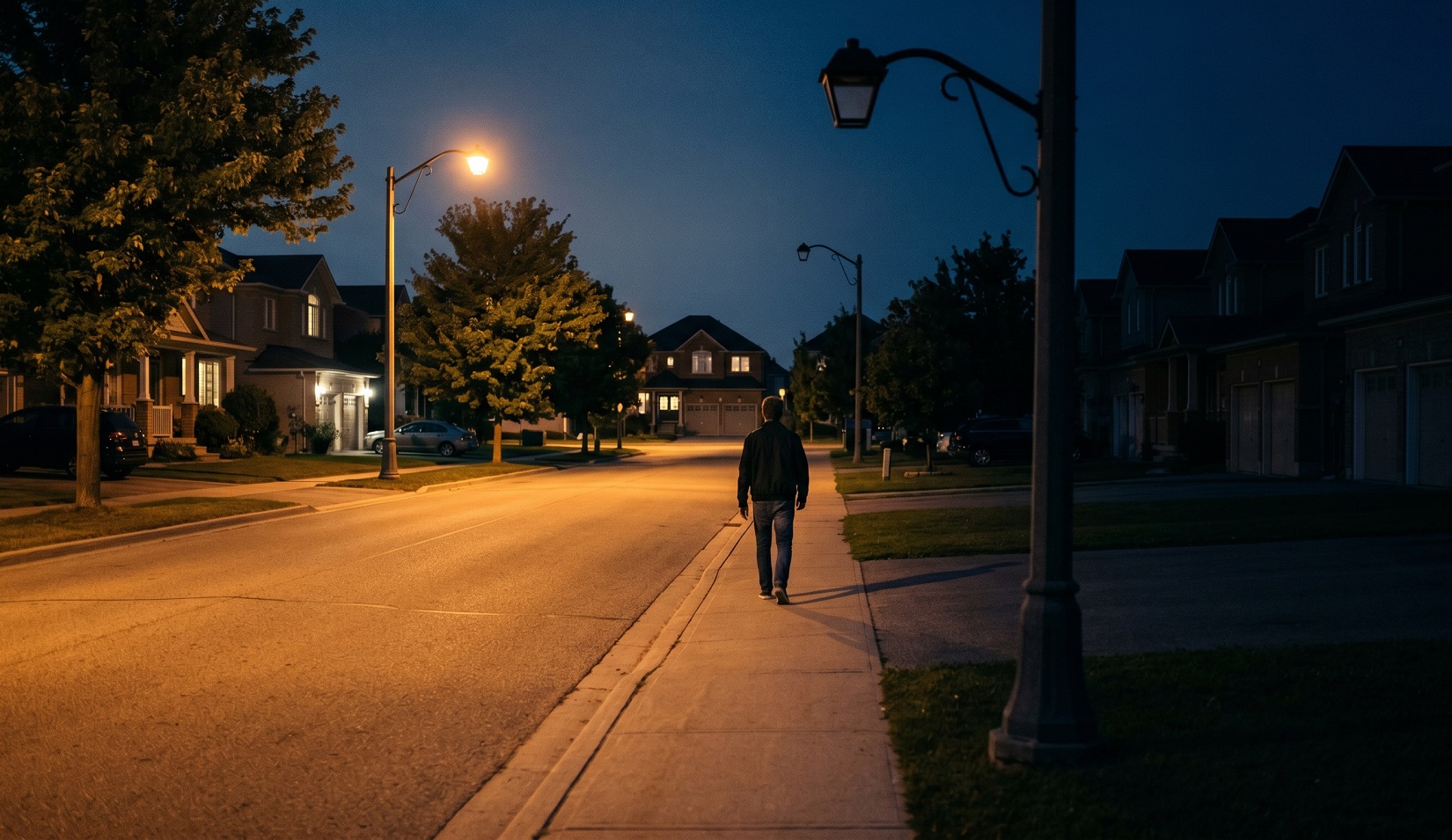
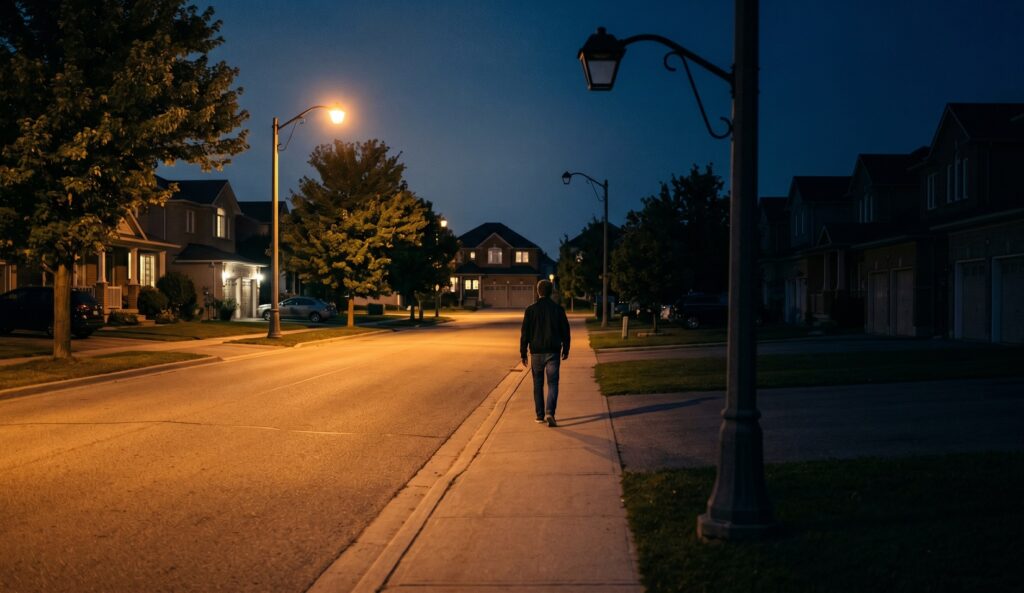
You’re walking home one evening. The street ahead is dark. Not power-cut dark — just… quiet, dimmed, oddly empty of light. You look up. The streetlight is there. It just isn’t on.
This isn’t your imagination. And it’s happening in cities from Calgary to Chicago, Vancouver to Virginia. US and Canada cities going dark has become one of the strangest urban stories of 2026 — and almost nobody is talking about the full picture.
So what’s actually going on? Three separate forces are colliding at once: mass LED streetlight failures, deliberate budget-driven switch-offs, and a new generation of “smart” lights designed to go dark the moment you’re not there. Let’s untangle all of it.
Why US and Canada Cities Are Experiencing Street Lighting Outages
The short answer most people get is “it’s a bulb issue.” That’s true — but it’s only one slice of the story.
Purple-hued streetlights were first reported in scattered US markets in early 2021, before spreading to multiple states and Canadian cities, prompting utilities and transportation departments to initiate warranty replacements. Wikipedia But that’s actually the least alarming version of the problem. Some lights don’t turn purple. They just go out — and stay out.
Here’s the direct-answer version: Cities across the US and Canada are going dark because ageing streetlight infrastructure is failing at scale, budgets to replace it are stretched thin, and a parallel technology shift is making certain streets intentionally dimmer by design. All three things are happening simultaneously, in 2025 and 2026, in ways that are compounding each other.
Street lighting accounts for up to 40% of city electricity budgets in some cases— which means it’s one of the first places finance departments look when municipal coffers run dry. In Toronto, for example, the utility reported more than 25,000 service calls for streetlight outages and emergency repairs in 2025 alone, before the city finally committed to a $577 million LED overhaul by 2035.
That’s a lot of dark streets waiting for the money to arrive.
The Three Forces Making Streets Darker — A Deep Dive
1. The LED Phosphor Defect Nobody Warned You About
This one reads like a bad sci-fi plot. Between 2017 and 2019, cities across North America enthusiastically upgraded to LED streetlights — greener, cheaper, longer-lasting. Sounds great. Except a batch of fixtures from that era had a hidden flaw.
Trade analysts and transportation departments broadly attribute the problem to failure of the phosphor layer in some white-LED packages, which allows excess blue-violet emission to pass unconverted. Some lights turn an eerie purple. Others simply lose luminosity and fail entirely.
Think of it like sunscreen on your skin. The phosphor coating is what makes LED light “white” — it converts blue-violet wavelengths into something the human eye reads as warm daylight. When that coating cracks or peels, the light either goes full ultraviolet purple, or just… gives up. Additional cities reporting issues included Milwaukee, Wisconsin; Eau Claire, Wisconsin; Schaumburg, Illinois; Palm Beach, Florida; Los Angeles, California; and Bend, Oregon, as well as cities in multiple Canadian provinces.
Replacements are happening. But they take time. And in the meantime, your street stays dark.
2. Budget Cuts — The Deliberate Switch-Off
Some cities aren’t waiting for lights to fail. They’re choosing to turn them off.
Strapped for cash, cities across the US have decided to save money by turning off street lights with San Diego documented as carrying a $30 million maintenance backlog. It’s not isolated — it’s a national pattern. Smaller towns have been doing this quietly for years.
Imagine this: you live in a mid-sized midwest city. The council votes to remove lights from the middle of residential blocks, keeping only intersections lit. You save a few hundred thousand dollars citywide. But your block is now dark from 11pm onwards, in a neighbourhood where crime has been creeping up. That’s the trade-off cities are making right now — and residents often don’t find out until the lights don’t come on one night.
Many cities are leaving streetlights at intersections but removing them from residential neighbourhoods, especially from the middle of blocks. In Minnesota alone, more than 30 towns added “streetlight fees” to utility bills to try to cover the gap.
3. Smart Lighting That’s Designed to Go Dark
Here’s the twist that trips most people up. Not every dark street is a failure. Some are working exactly as intended.
With smart dimming capabilities, streetlights can adjust brightness based on traffic patterns, peak hours, and urban needs — automatically dimming during late-night periods to conserve energy. If no pedestrian or vehicle is detected, the light drops to 20–40% brightness. Sometimes lower. In a quiet suburb at 2am, that can look — to a passing driver or an anxious resident looking out a window — like the lights have simply gone out.
In November 2025, Washington DC’s Smart Street Lighting Project advanced with Acuity Brands upgrading over 75,000 streetlights to energy-efficient LEDs with remote monitoring, reducing energy by over 50%. In September 2025, Los Angeles partnered with Itron to upgrade 100,000 fixtures using an IoT-enabled platform with predictive maintenance.
These are enormous programmes. Hundreds of thousands of lights, continent-wide, switching to behaviour that looks like failure to anyone who doesn’t know the system has changed. No press release. No community notice. Just suddenly darker streets.
| Force | Cause | Cities Affected | Fix Timeline |
|---|---|---|---|
| LED phosphor defect | Manufacturing flaw 2017–19 | 20+ US states, multiple CA provinces | Ongoing warranty replacements |
| Budget-driven switch-offs | Fiscal pressure | Nationwide, especially smaller cities | Dependent on municipal funding |
| Smart adaptive dimming | Intentional design | Major metros upgrading to IoT LEDs | Permanent feature, not a bug |
What Should You Actually Do If Your Street Goes Dark?
The good news: most of these situations are fixable, or at least reportable. Here’s how to navigate it depending on where you live.
Step 1 — Identify which type of darkness you’re dealing with. Walk past the light at different hours. If it flickers on when a car passes, it’s adaptive dimming — intentional. If it’s been dark for days regardless of traffic, it’s likely a defect or maintenance backlog. Record the pole number (usually printed on the post) and the location.
Step 2 — Report it through the right channel.
[US] Most US cities have a dedicated street lighting fault portal — search “[your city name] street light outage report” or call 311. Los Angeles, Chicago, and New York all have online tools.
[UK] UK residents can report via their local council website. Most councils have a “report a street light fault” page — you’ll need the column number from the pole.
Step 3 — Escalate if there’s no response within 2 weeks. Contact your local councillor or city representative directly. Reference safety concerns, especially if the outage is on a heavily-used pedestrian route.
Step 4 — Check if your area is in a planned upgrade programme. Many cities now publish interactive maps of LED upgrade projects. A dark light in an upgrade zone might be temporarily disconnected during transition — and due back on within weeks.
PRO TIP: Don’t assume a dark light is a broken light. Search your city’s smart lighting upgrade announcements first. A surprising number of “outage” complaints are actually adaptive dimming systems working correctly — and the answer is just a transparency failure by the city, not a maintenance failure.
Myths and Misconceptions Worth Clearing Up
Myth 1: “It’s a government conspiracy.” As defective LED fixtures produced purple-hued roadway illumination across US cities, local and national outlets documented the emergence of conspiracy narratives attempting to ascribe intentionality to the phenomenon — even as transportation agencies attributed the colour shift to known technical faults in specific product lines. Dark streets feel sinister. That feeling is understandable — but the cause is almost always banal: bad phosphor, tight budgets, or software.
Myth 2: “Dark streets are always more dangerous.” Counterintuitive, but nuance matters here. Upgrading streetlights to brighter LED fixtures in Philadelphia led to a 15% reduction in outdoor nighttime street crime and a 21% decrease in nighttime gun violence over a 10-month period. Better lighting helps. But a street that goes from 100% brightness to 40% adaptive dimming isn’t the same as a street with no light at all — the safety calculus is more complex than people assume.
Myth 3: “Only old or poor cities have this problem.” Toronto, Los Angeles, Washington DC, and New York are all mid-overhaul right now. Dark stretches during infrastructure upgrades are temporary, not a signal of permanent neglect. The cities investing most in smart lighting will often have the most transitional darkness in 2025–26.
Myth 4: “Turning off lights saves the environment.” Partly true. Dark sky initiatives do reduce light pollution. But unplanned outages — especially in lower-income neighbourhoods — don’t help the environment. Dark streets lead to higher crime rates, traffic accidents, and decreased economic activity, with these risks disproportionately impacting underserved neighbourhoods, where lighting repairs take longer to address.
Myth 5: “If the city upgraded to LED, we’re fine.” See: the phosphor defect. LED doesn’t mean invincible. The generation of fixtures installed between 2017 and 2019 is currently the most vulnerable cohort in the entire North American street lighting ecosystem.
Frequently Asked Questions About US & Canada Cities Going Dark
Why are street lights randomly turning off at night?
In most cases it’s one of three things — a manufacturing defect in LED phosphor coatings (especially lights installed 2017–2019), deliberate budget-driven switch-offs in low-traffic areas, or smart adaptive dimming systems that reduce brightness when no movement is detected. The third reason is increasingly common as cities upgrade to IoT-connected lighting in 2025–26.
Is it true Canada could cut power to US cities?
Several states including New York, Michigan, and Minnesota receive significant amounts of electricity from Canada, including New England states. While trade tensions have raised hypothetical concerns, a full cut-off is considered unlikely — the more realistic risk is higher energy prices, which indirectly pressures city lighting budgets further.
How do I report a street light that’s out?
In the US, call 311 or use your city’s online fault reporting portal — search “[city name] report street light outage.” In Canada, report via your municipality’s website or 311 service. Most systems allow you to report using the pole number printed on the streetlight post itself.
Are darker streets causing more crime?
Research suggests well-lit streets do reduce crime. A 2025 University of Pennsylvania study found that LED upgrades in Philadelphia led to a measurable drop in both street crime and gun violence. However, smart dimming systems (which reduce but don’t eliminate light) are not the same as total outages — the crime risk is most acute in areas where lights fail entirely and are not repaired quickly.
When will the LED defect replacements be finished?
There’s no single national timeline. Replacement programmes are run municipality by municipality under warranty claims with manufacturers like Acuity Brands. Most programmes are targeting completion by 2026–2027, but delays are common due to parts availability and installation backlogs.
The Lights Will Come Back — But the Story Isn’t Over
The darkening of North American streets in 2025–26 isn’t a single story. It’s three stories wearing the same coat: a manufacturing flaw catching up with a decade of LED adoption, a fiscal squeeze forcing councils to make uncomfortable choices, and a technology transition that nobody explained to the people living under it.
The most frustrating part? Most of this darkness was avoidable with better communication. A city that tells residents “your lights will dim automatically after midnight” doesn’t get 311 calls and angry Reddit threads. A city that just changes the settings and says nothing gets exactly the headlines it deserves.
Stay curious — and report that dark pole on your street. You’d be surprised how often one complaint actually triggers a fix.
Explore more stories like this in our Life & Mysteries section, or check out how energy costs are reshaping everyday life in our Finance & Rebates coverage.
ViralZip.blog is powered by a dedicated team of digital analysts and tech journalists committed to “zipping” through the noise of the information age. With a combined background in investigative research and financial data analysis, our contributors focus on the intersection of emerging AI technology, local economic shifts, and global news trends. We take pride in translating complex data into actionable insights for modern residents across the US and UK. Our mission is to provide high-velocity, reliable information that empowers our readers to navigate the rapidly evolving landscape of 2026.
Disclaimer: The content provided on ViralZip.blog is for informational and educational purposes only. While we strive for accuracy, the fields of artificial intelligence, financial rebates, and medical technology are subject to rapid changes; therefore, we do not guarantee the completeness or absolute reliability of the information provided. This content does not constitute professional financial, medical, or legal advice. Always consult with a licensed professional—such as a financial advisor, doctor, or attorney—before making significant decisions based on trending data. ViralZip.blog is not responsible for any actions taken or outcomes achieved based on the suggestions provided in our articles