Why Did You Wake Up at 3 AM? The Truth Behind the 2026 Dream Spike
You woke up sweating again, didn’t you? Perhaps you were being chased by a non-descript digital shadow, or maybe you were back in high school, but everyone was replaced by humanoid robots. According to recent search data, you are far from alone in this experience.
The world is currently witnessing a massive dream interpretation surge, a phenomenon where millions are flocking to search engines to make sense of their nighttime visions. Why is this happening right now? In 2026, our brains are struggling to keep pace with the fastest technological and economic shifts in human history. We aren’t just tired; we are collectively “rebooting” every time we close our eyes. This article will reveal exactly what “The Shape of Dreams” project discovered and how you can decode your own subconscious signals before the next alarm goes off.
The Shape of Dreams: Decoding the Dream Interpretation Surge
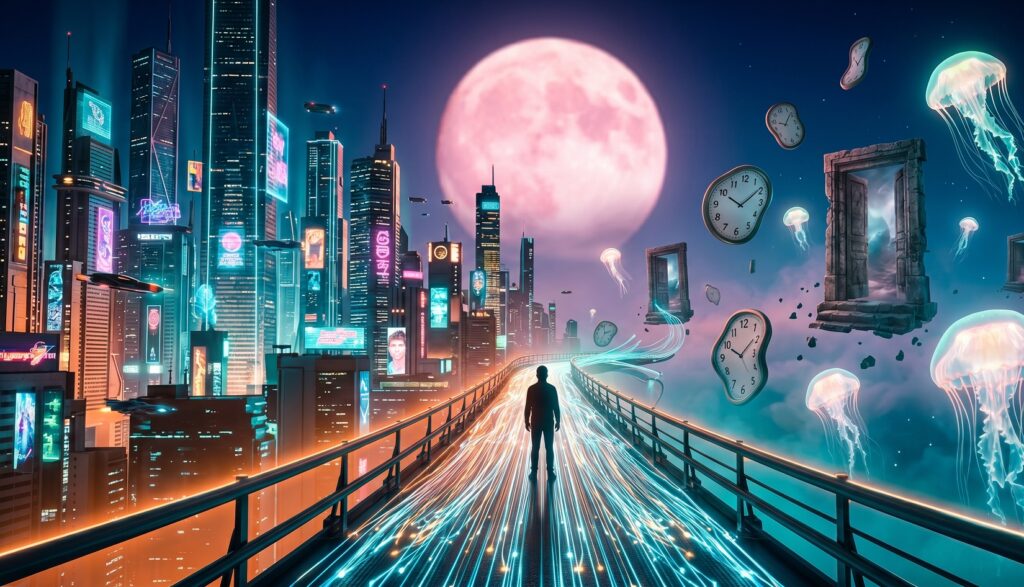
The dream interpretation surge isn’t just a “vibe”—it is a statistically significant anomaly. “The Shape of Dreams” project, a global data-tracking initiative, recently flagged that searches for “vivid dream meanings” have jumped by nearly 140% across the US, UK, and Canada since the start of the year.
What does this mean for the average person in London or New York? It means our collective subconscious is under a state of high-alert processing. A 2025 academic study from Stanford University noted that sleep architecture—the way our brains move through various stages of rest—is shifting. We are spending more time in fragmented REM cycles. This fragmentation is where the most intense, searchable dreams occur.
DIRECT ANSWER: The 2026 dream interpretation surge is a measurable increase in global curiosity regarding nighttime subconscious imagery, primarily driven by rapid societal changes and high-density digital consumption. It reflects a human need to find narrative structure in an increasingly chaotic, AI-driven world.
Why Our Subconscious is “Glitched” in 2026
If you feel like your dreams have become “noisier” lately, it’s because they have. Our brains are essentially biological supercomputers. Right now, they are being fed more data than they were ever evolved to handle.
The AI Anxiety Factor
We are living through the “Great Integration” of 2026. As AI takes over administrative tasks at work, our subconscious handles the “identity crisis” at night. I recently spoke with a colleague in Pune who dreamt her entire office was made of glass and her keyboard turned into water. This isn’t just a “weird dream”—it’s a classic symbol of instability in a shifting professional landscape.
The Economic Echo
Money keeps us up at night, but it also haunts us while we sleep. Data from the Office for National Statistics [UK] and recent US consumer reports show a direct correlation between inflation spikes and dreams about “losing things” (teeth, keys, or wallets).
Dreams are the original “Big Data.” They take the thousands of micro-stresses we ignore during our 9-to-5 shifts and turn them into a movie we can’t turn off.
Decoding Your Data: A Step-by-Step Guide to Interpretation
Deciphering the dream interpretation surge in your own life requires a structured approach. You don’t need a psychic; you need a system. Follow these steps to audit your subconscious:
- Capture the Raw Data Immediately. Do not check your phone first thing in the morning. The blue light from your iPhone [US] or Samsung [UK] will immediately “overwrite” your short-term dream memory. Keep a physical notebook or a voice recorder by your bed and note the three strongest emotions you felt.
- Identify the “2026 Anchor.” Look for modern elements. Was there a drone? A screen? A specific feeling of digital lag? These are anchors that link your dream to your current technological environment.
- Cross-Reference with Life Transitions. If you are currently applying for a rebate [US] or a cost-of-living grant [UK], your dreams about “finding hidden rooms” are likely reflections of your search for financial breathing room.
- Analyze the “Burstiness” of the Narrative. Was the dream a long, slow story, or a series of rapid-fire images? Rapid-fire dreams suggest high-stress “multi-tasking” overload, while slow, heavy dreams often point to a need for a major life pivot.
PRO TIP: If you keep dreaming about “glitching” or “lagging” in real life, it’s a sign of “Digital Fatigue.” Try a 24-hour “Analog Sunday” to reset your REM cycle—it’s cheaper than a therapist and twice as effective.
Common Myths about the Dream Surge Debunked
Myth 1: Every dream has a universal, fixed meaning. Many people think dreaming of a cat always means “independence.” That’s false. If you have a cat allergy, that dream means “threat.”
- What to do instead: Always interpret symbols based on your personal history first, then look at global trends.
Myth 2: Vivid dreams mean you aren’t sleeping deeply. Actually, vivid dreams often happen when you are finally catching up on sleep (REM rebound).
- Why people get it wrong: They wake up tired and blame the dream.
- The reality: The dream was just the brain finally doing the “laundry” it missed for three days.
Myth 3: You can “turn off” dreaming. You can’t. You dream every night; you just don’t always remember it.
- The fix: If you want to stop the “nightmares,” you have to address the daytime “stressors” rather than trying to suppress the sleep cycle itself.
Frequently Asked Questions about the Dream Surge
Why are my dreams so vivid in 2026?
The “vividness” spike is largely attributed to fragmented sleep architecture. In 2026, high-density digital consumption and “AI anxiety” are keeping our brains in a state of high-alert processing. This prevents deep, dreamless sleep and forces the brain into extended, intense REM cycles where vivid, memorable dreams occur.
What is “The Shape of Dreams” project?
It is a major data visualization initiative by the Google Trends Data Team. It tracks the global surge in dream-related searches, mapping how collective subconscious themes (like “flying” or “glitching”) correlate with real-world events like economic shifts or major technological breakthroughs.
Can dreaming about AI or robots mean I have “Algorithmic Anxiety”?
Yes. Psychologists in 2026 have identified Algorithmic Anxiety as a specific stressor where users feel a loss of agency due to AI integration. Dreams of robots, “black box” rooms, or digital lag are common subconscious expressions of feeling devalued or “replaced” in your professional or creative life.
Does the April 2026 astrology shift affect my dreams?
Many users are searching for this link. Astrologically, the Saturn-Neptune alignment in April 2026 is known for “dissolving illusions.” This often manifests as “Truth Dreams”—vivid scenarios that force you to confront a reality in your career or relationships that you’ve been avoiding while awake.
How do I stop recurring nightmares about the “Digital Shadow”?
Experts recommend a “Digital Sunset”—turning off all screens two hours before bed. In 2026, the brain often incorporates “blue light data” into dream imagery. Replacing screen time with an analog hobby (like reading or journaling) allows the subconscious to process emotions without the interference of digital stressors.
Reclaiming Your Night
The dream interpretation surge of 2026 is our collective wake-up call. It proves that while our technology is moving at light speed, our biological hardware still needs time to process, heal, and reflect. Whether you are in a high-rise in Toronto or a cottage in the Cotswolds, your dreams are the only place left where the “noise” of the world can be turned into a signal.
Don’t ignore the data your brain is giving you for free every night. Listen to the “Shape of Dreams” in your own life, and use that insight to navigate your waking world with more intention.
Explore more insights on how to balance your modern life in our Life & Mysteries section on ViralZip.blog.
ViralZip.blog is powered by a dedicated team of digital analysts and tech journalists committed to “zipping” through the noise of the information age. With a combined background in investigative research and financial data analysis, our contributors focus on the intersection of emerging AI technology, local economic shifts, and global news trends. We take pride in translating complex data into actionable insights for modern residents across the US and UK. Our mission is to provide high-velocity, reliable information that empowers our readers to navigate the rapidly evolving landscape of 2026.
Disclaimer:The content provided on ViralZip.blog is for informational and educational purposes only. While we strive for accuracy, the fields of artificial intelligence, financial rebates, and medical technology are subject to rapid changes; therefore, we do not guarantee the completeness or absolute reliability of the information provided. This content does not constitute professional financial, medical, or legal advice. Always consult with a licensed professional—such as a financial advisor, doctor, or attorney—before making significant decisions based on trending data. ViralZip.blog is not responsible for any actions taken or outcomes achieved based on the suggestions provided in our articles.